I have been called a great deal of things in my lifetime, but neither "agricultural" nor "agrarian" have ever been among them. Despite being raised mostly in a rural environment, I have never liked farming and I do not enjoy raising livestock. However, when I read about Foodchain and its operation I was hooked on the idea of aquaponics immediately. It was almost unbelievable to me that by combining fish farming and hydroponic agriculture not only would it lesson the environmental impact of each but increase the yields of both, all in an entirely organic way. I was even more excited to learn about Foodchain's mission, as not only do they wish to provide access of fresh, locally grown produce to the community, they want to help inspire and teach others in the community how they can grow their own fresh produce, even in an urban environment. In fact, they are currently fundraising to open up a Teaching and Processing kitchen that will host "after school cooking classes for youth, knife skills training, nutrition education, and family meal preparation workshops for low income families and individuals."
Simply due to the nature
of their operation, Foodchain is one of the most proactive organizations
currently attempting to strengthen the local economy and increase quality of
life for its Lexington's urban population.
 |
| (Accessed from www.foodchainlex.org) |
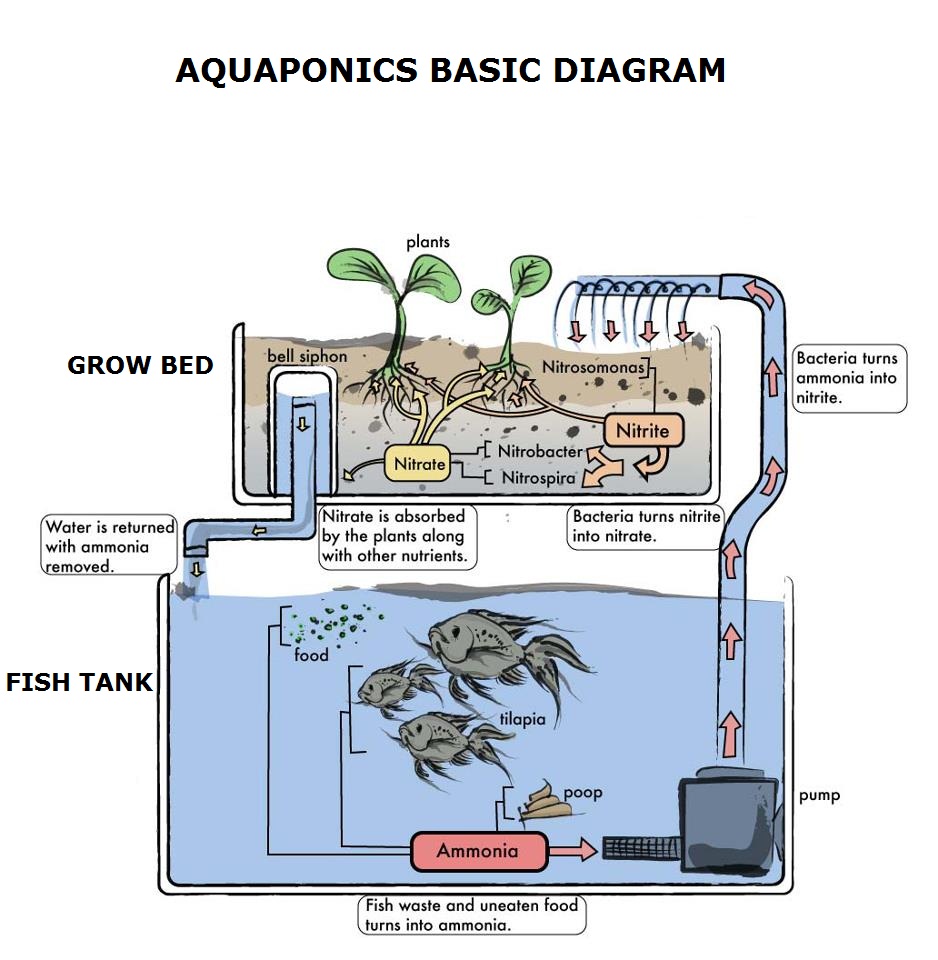
The basic idea behind aquaponics is as simple as it is brilliant, the plants and fish grow together in a symbiotic relationship, just as in nature. The fish create waste in the form of ammonia which bacteria in the water convert into nitrates which then in turn is absorbed by the plants, serving to both fertilize the plants and filter the water for the fish.
 |
| (Accessed from aquaponicsphilippines.com) |
This idea is by no means new, farmers in South-east Asia have grown rice in paddy fields along with fish for centuries, however, the technology is somewhat new, with the first large
scale aquaponics operation being started in the mid 1980’s in Germany and still
operating today. As a movement, aquaponics is growing quickly with new
facilities opening up all over the world, especially in urban areas where
farming space is more limited. With any luck, Foodchain is only the first of many large scale aquaponic operations in Kentucky's future.


Why do they use tilapia and not another fish? Do you know?
ReplyDeleteThe reason they use Tilapia is because it is a fast growing fish with a fairly mild flavor that many people like. However, many different types of fish can be raised in an aquaponics system.
Delete